2026, 42(2): 345-355.
DOI: 10.12449/JCH260214
Abstract:
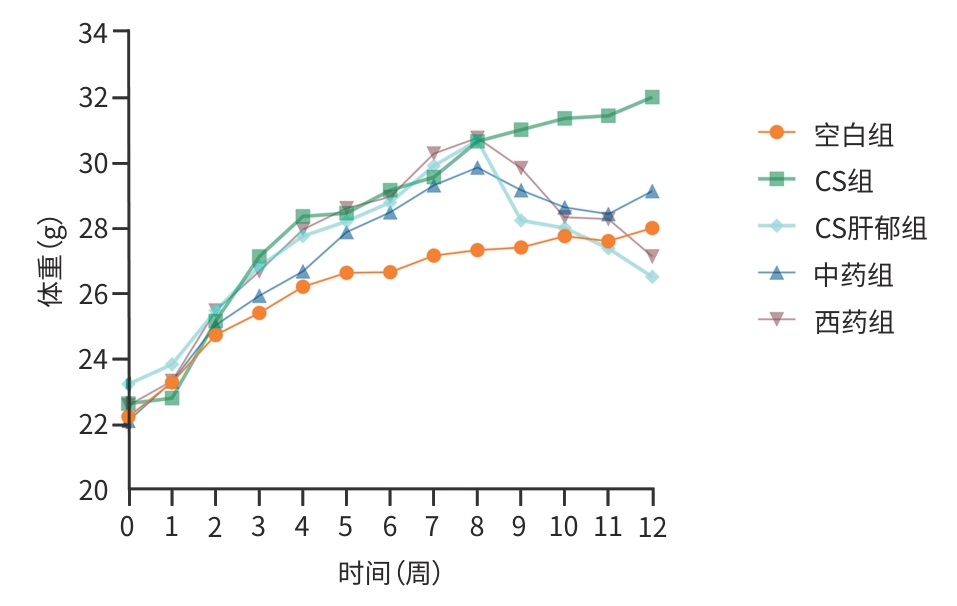
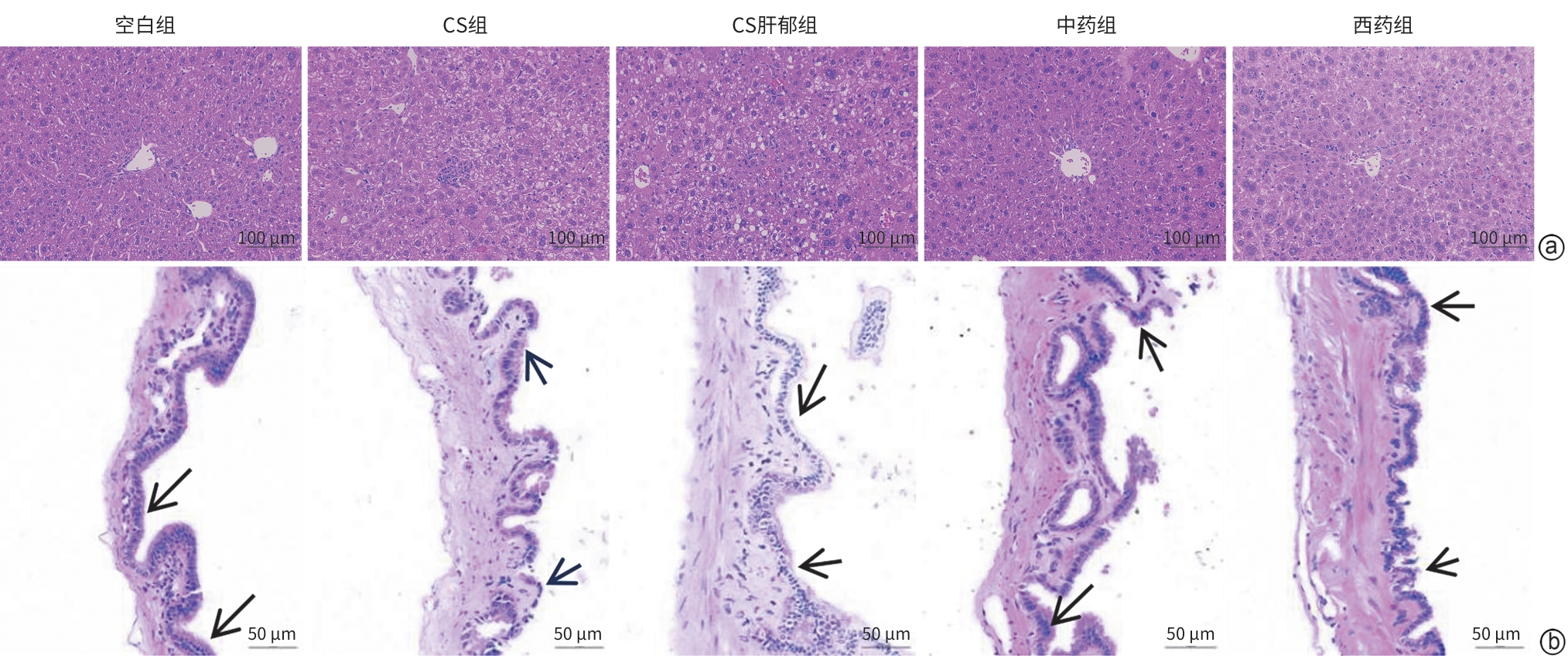
Objective To investigate the therapeutic effect and mechanism of Huatan Qushi Huoxue prescription on rats with metabolic dysfunction-associated steatohepatitis (MASH). Methods A total of 60 specific pathogen-free Sprague-Dawley rats were randomly divided into blank control group, model A group, model B group, Western medicine group (polyene phosphatidylcholine, 143.64 mg/kg), high-dose Chinese medicine group (Huatan Qushi Huoxue prescription, 20.16 g/kg), and middle-dose Chinese medicine group (Huatan Qushi Huoxue prescription, 10.08 g/kg). All rats except those in the blank control group were given high-fat diet. Samples were collected from the model A group at week 8, and since week 12, the other groups were given the corresponding drug once a day for 8 consecutive weeks, with samples collected at week 20. Body weight, liver wet weight, and liver index were measured for all rats; the microplate method was used to measure the serum levels of alanine aminotransferase (ALT), aspartate aminotransferase (AST), total cholesterol (TC), triglycerides (TG), high-density lipoprotein cholesterol (HDL-C), low-density lipoprotein cholesterol (LDL-C), and free fatty acids (FFA); ELISA was used to measure the serum levels of tumor necrosis factor-α (TNF-α), interleukin-1β (IL-1β), interleukin-6 (IL-6), and soluble triggering receptor expressed on myeloid cells 2 (sTREM2); HE staining and oil red O staining were performed to observe liver histopathological changes; immunofluorescence assay was used to measure CD68+TREM2+ cells in liver tissue and calculate the phagocytosis rate of macrophages; quantitative real-time PCR was used to measure the mRNA expression levels of sphingosine 1-phosphate (S1P), sphingosine 1-phosphate receptor 1 (S1PR1), a disintegrin and metalloproteinase 17 (ADAM17), and triggering receptor expressed on myeloid cells 2 (TREM2) in liver tissue, and immunohistochemistry was used to measure the protein expression levels of S1P, S1PR1, ADAM17, and TREM2 in liver tissue. A one-way analysis of variance was used for comparison of normally distributed continuous data with homogeneity of variance between groups, and the least significant difference t-test was used for further comparison between two groups; the Welch’s test was used for comparison of normally distributed continuous data with heterogeneity of variance between groups, and the Tamhane’s test was used for further comparison between two groups. The Kruskal-Wallis H test was used for comparison of non-normally distributed continuous data between groups, and the Dunn’s test was used for further comparison between two groups. Results Compared with the blank control group, the model A group and the model B group had significant increases in body weight and liver wet weight, and the model B group had a significant increase in liver index (all P<0.05). HE staining showed diffuse macrovesicular steatosis of liver tissue in the model A group and a large number of hepatocytes with ballooning degeneration in liver tissue in the model group B, with the presence of mixed inflammatory cell infiltration and mild perisinusoidal fibrosis in the lobules and the portal area. Compared with the blank control group, the model A group and the model B group had significant increases in NAS score and oil red O-positive area (all P<0.05), and the model B group had significant increases in these two indicators than the model A group (both P<0.05). Compared with the blank control group, the model A group and the model B group had significant increases in the serum levels of TC, TG, LDL-C, FFA, IL-1β, IL-6, and sTREM2 and a significant reduction in the serum level of HDL-C, and the model B group had significant increases in the serum levels of ALT, AST, and TNF-α (all P<0.05); compared with the model A group, the model B group had significant increases in the serum levels of ALT, AST, TC, TG, FFA, TNF-α, IL-1β, IL-6, and sTREM2 and a significant reduction in the serum level of HDL-C (all P<0.05). Immunofluorescence assay showed that compared with the blank control group, the model A group had a significant increase in the phagocytosis rate of macrophages (P<0.05), while the model B group had a significantly lower phagocytosis rate of macrophages than the model A group (P<0.05). Quantitative real-time PCR showed that compared with the blank control group, the model A group and the model B group had a significant increase in the mRNA expression level of TREM2, and the model B group had significant increases in the mRNA expression levels of S1P and S1PR1 (both P<0.05); moreover, compared with the model A group, the model B group had significant increases in the mRNA expression levels of S1PR1 and TREM2 (both P<0.05). Immunohistochemistry showed that compared with the blank control group, the model A group and the model B group had significant increases in the protein expression levels of S1P, S1PR1, and ADAM17, and the model A group had a significant increase in the protein expression level of TREM2 (all P<0.05); compared with the model A group, the model B group had significant increases in the protein expression levels of S1P, S1PR1, and ADAM17 and a significant reduction in the protein expression level of TREM2 (all P<0.05). Compared with the model B group, each medication group had significant reductions in body weight, liver wet weight, and liver index (all P<0.05); each medication group had significant improvements in hepatic steatosis and inflammatory damage, with significant reductions in NAS score and oil red O-positive area (all P<0.05); each medication group had significant reductions in the serum levels of ALT, AST, TC, TG, FFA, IL-1β, and IL-6 (all P<0.05) and a significant increase in the serum level of HDL-C (P<0.05), and the high-dose Chinese medicine group had a significant reduction in the serum level of TNF-α (P<0.05); each medication group had a significant increase in the phagocytosis rate of macrophages (all P<0.05); the high- and middle-dose Chinese medicine groups had a significant reduction in the protein expression level of ADAM17, and the high-dose Chinese medicine group had a significant increase in the protein expression level of TREM2 (all P<0.05). Conclusion Huatan Qushi Huoxue prescription improves lipid metabolism and inflammation in the liver of MASH rats by regulating hepatic macrophage phagocytosis.
ZHANG LH, LIU ST, ZHAO Q, et al. Effect of Huatan Qushi Huoxue prescription on macrophage efferocytosis mediated by a disintegrin and metalloproteinase 17 and triggering receptor expressed on myeloid cells 2 in rats with metabolic dysfunction-associated steatohepatitis[J]. J Clin Hepatol, 2026, 42(2): 345-355.. doi: 10.12449/JCH260214.


 Abstract
 HTML
HTML PDF (1145KB)